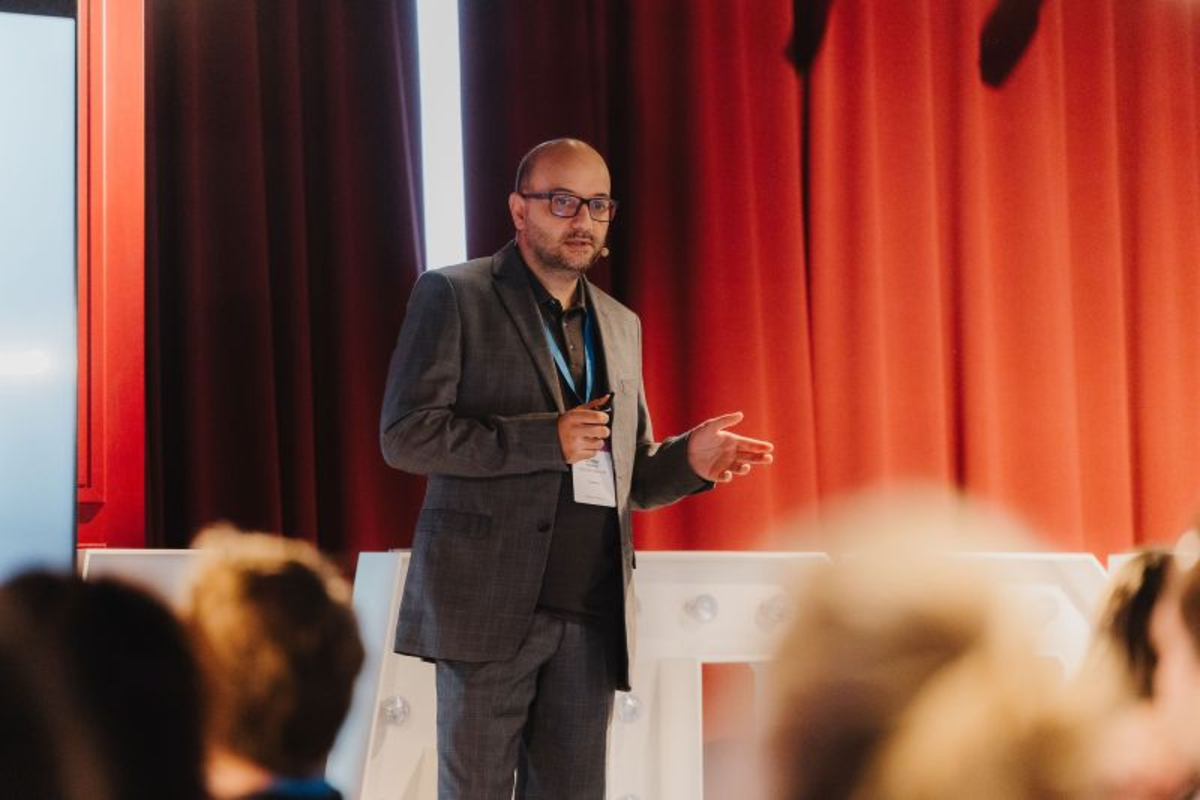
Teach AI to Know, Do and Ask.
Last week I delivered the opening keynote and chaired AI & Automation Day Belgium in Ghent. A week earlier I was part of a panel in Riyadh. The culture and location were very different, but the questions were remarkably similar: how much do we trust AI to act on its own, and what does it need from us to do so responsibly?
In Ghent, I gave the audience three questions to carry through the day.
Know. What does AI need to know to make this decision well? Including the context that lives in people's heads.
Do. What can it do independently? Drafting a response, sending it and approving a refund each require different levels of authority.
Ask. When should it stop and involve a person? And who is actually responsible for answering?
Imagine an agent handling a customer refund. It finds conflicting policies and pauses for approval. Customer service refers it to finance. Finance refers it to a manager. The customer waits.
The agent followed the rules. We still have a decision nobody owns.
That is why I find these three questions useful. They make us examine our own organisation as closely as the technology.
The programme in Ghent explored autonomous businesses, data ownership, responsible AI, people and scaling. These are not separate themes. Together, they determine whether an AI initiative can move from a promising demo to a trusted part of daily operations. Know. Do. Ask. helps turn them into practical decisions about data, processes, people and accountability.
And perhaps that is the real challenge: not teaching AI to know, do and ask, but teaching ourselves what AI should know, what it may do and when it must ask.
Thank you Heliview and Luna V. for the invite, it was great fun to do, and for the valuable exchange with great people on stage: Philippe De Ridder, Nathalie Rigouts, Koen Williame, Rik Van Bruggen, Erwin Maussen, Bert Meskens, Arnaud Massaert.