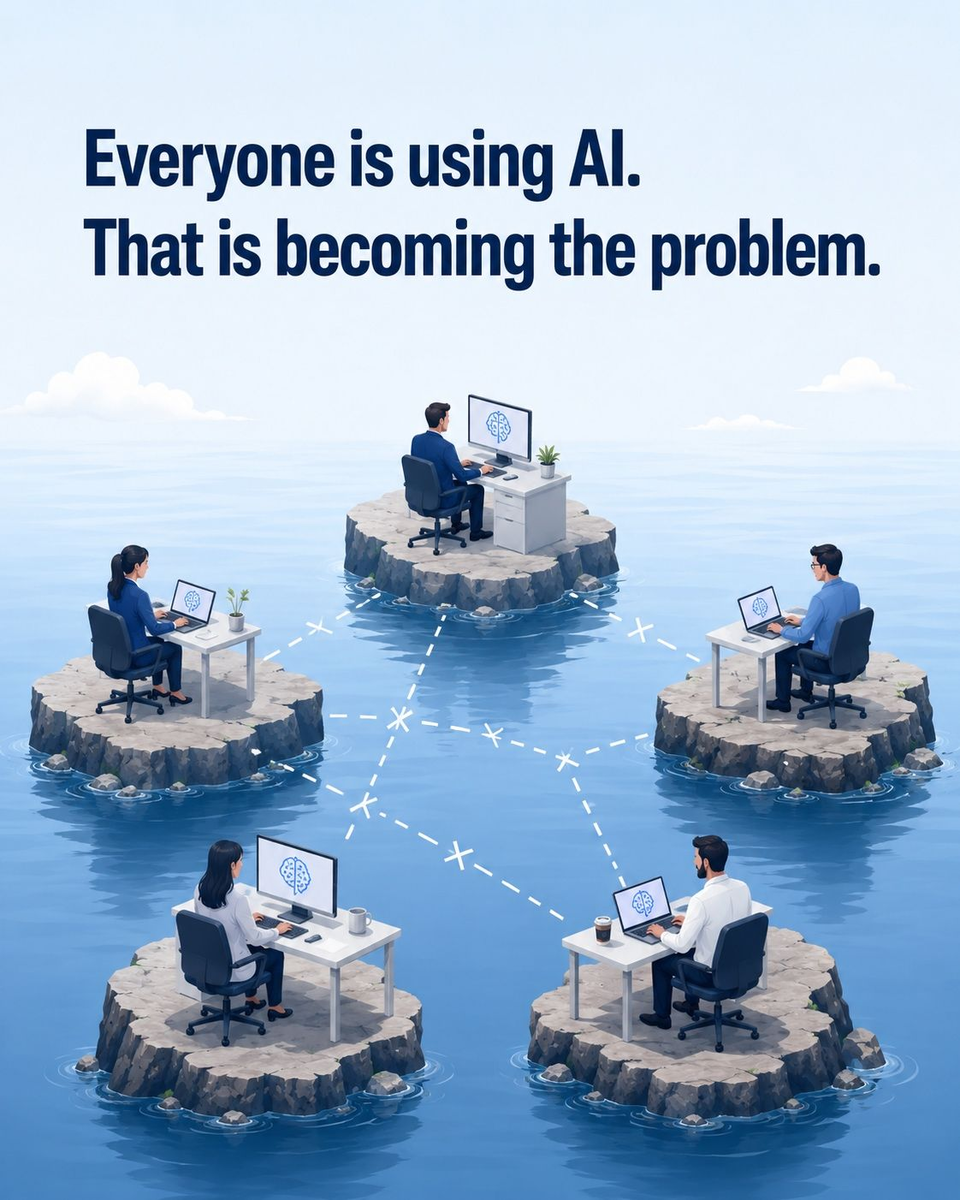
Everyone is using AI. That is becoming the problem.
Not because AI is bad. Not because people should stop experimenting.
The problem is that AI is entering companies faster than teams can structure its use.
One person uses ChatGPT for strategy. Another uses Claude for documents. A developer uses Copilot. A recruiter uses an AI sourcing tool. A manager uses AI to summarise meetings. A sales team uses AI to write outreach.
Individually, all of this can be useful.
Together, it can become a silent mess.
No shared rules. No clear ownership. No common way of checking quality. No memory of what worked. No agreement on what should stay human.
This is where many companies are now.
They think they are becoming AI-driven, but in reality they are becoming AI-scattered.
The next phase of AI adoption will not be about who has the most tools.
It will be about who creates the clearest structure.
Which tasks should AI support? Which decisions should stay with people? Which data is safe to use? Who checks the output? Where does the knowledge go after the task is done?
These are not boring governance questions.
They are leadership questions.
Because when AI spreads without structure, people do not become more powerful. They become more distracted.
The best companies will not be the ones where everyone uses AI randomly.
They will be the ones where AI becomes part of the operating system of the organisation.
Clear enough to trust. Simple enough to use. Structured enough to scale.
AI adoption has already happened.
Now the real work begins: turning scattered usage into intelligent systems.
That is where the next advantage will be built.
What is your company doing today to move from AI usage to AI structure?