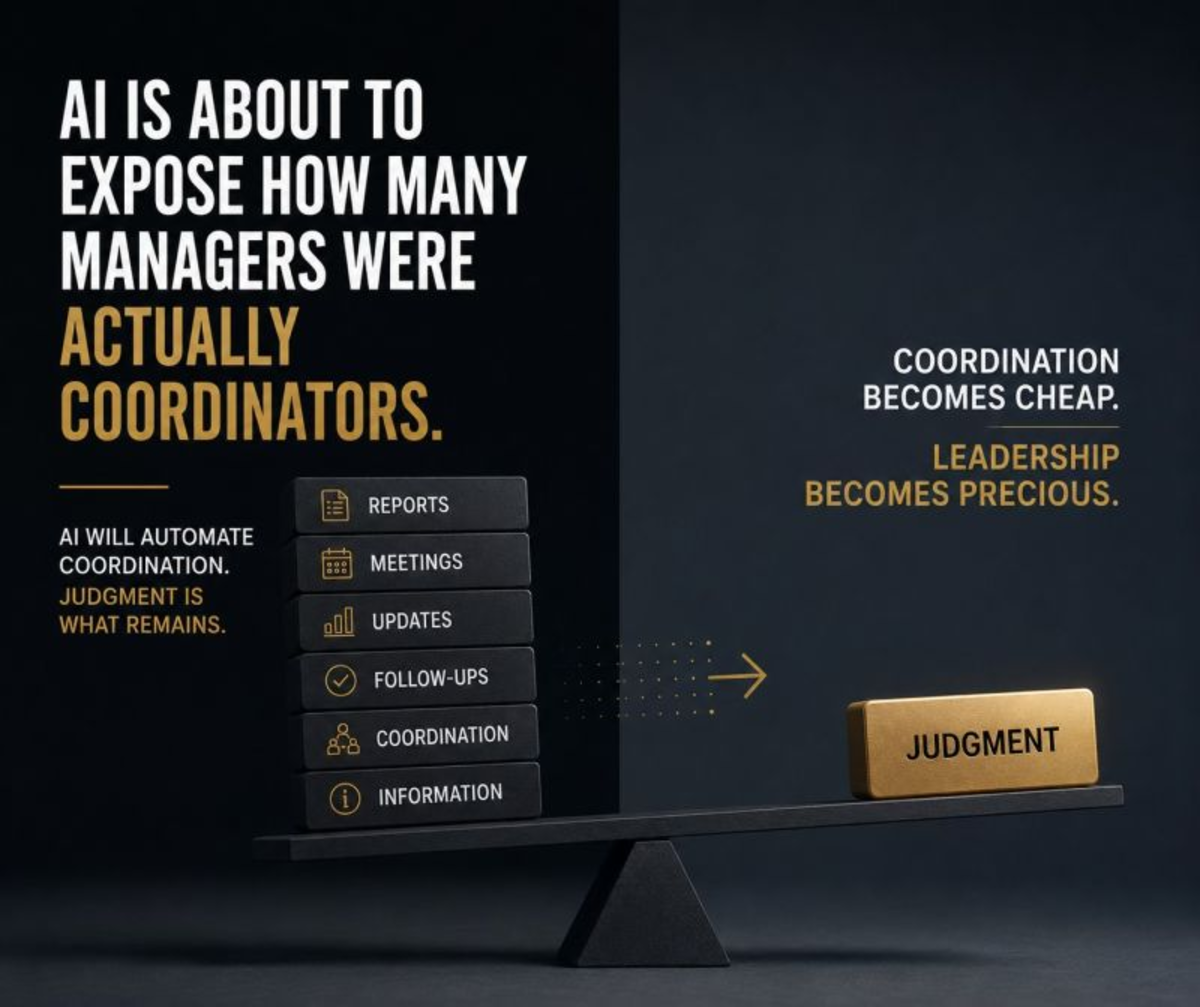
AI is about to expose how many managers were actually coordinators.
For decades, a surprising amount of management has been about keeping the organisation stitched together.
Collecting updates. Preparing reports. Scheduling meetings. Following up on actions. Moving information between teams.
We needed managers to do much of this because organisations are complicated and information moves badly.
AI changes that.
Agents can increasingly monitor work, summarise what is happening, coordinate tasks, prepare decisions and surface problems before someone asks for an update.
That removes a lot of the organisational glue work managers have traditionally performed.
But companies do not need managers to become better human workflow engines.
They need them to lead.
To set direction when the path is unclear.
To make strategic choices when there is no perfect answer.
To understand people beyond what appears on a dashboard.
To recognise opportunities others cannot yet see.
To challenge assumptions.
To take responsibility.
AI may push management away from coordination and closer to what it should have been all along:
Leadership, strategy and vision.
And that will be uncomfortable for some managers.
Because when AI can organise the work, being the person who keeps everything together may no longer be enough.
The question becomes much more demanding:
Can you see where the organisation should go?