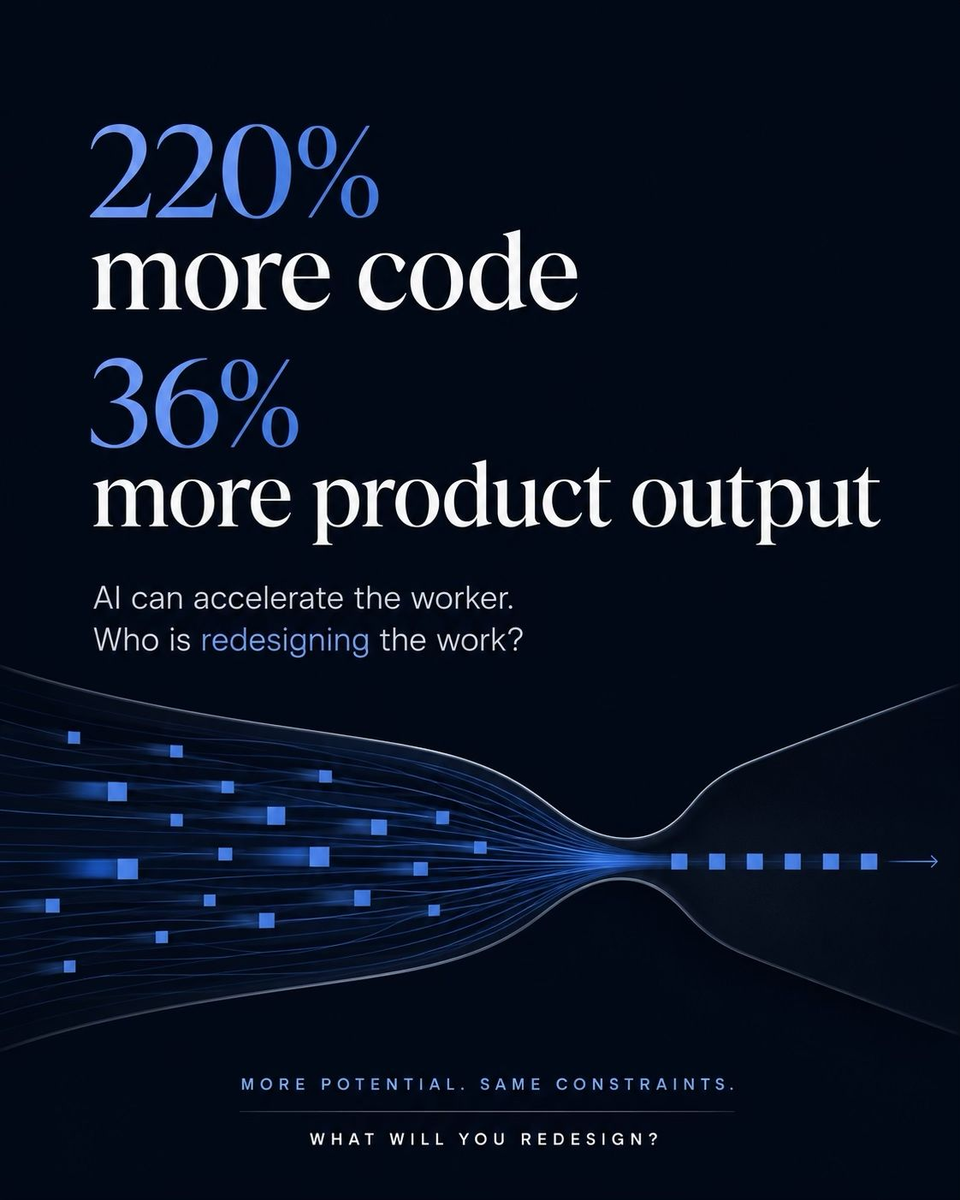
220% more code. Only 36% more product output.
Those two numbers from Meta may explain one of the biggest problems in enterprise AI right now.
According to internal data reviewed by Reuters, code changes on Meta's internal platforms and infrastructure increased 220% year over year.
But changes that actually resulted in new or improved features for users increased only 36%.
People were producing dramatically more.
Value was not moving at the same speed.
McKinsey's latest State of AI survey shows a similar pattern from another angle.
80% of respondents say AI has improved their individual productivity.
Only 37% report a positive impact on enterprise EBIT.
That gap matters.
We keep measuring how much faster AI makes the individual task.
Faster coding. Faster writing. Faster analysis. Faster decisions.
But organisations do not create value as a collection of isolated tasks.
Work moves through systems.
Reviews. Dependencies. Approvals. Handovers. Priorities. Management decisions.
Accelerate one part without redesigning the rest, and the bottleneck simply moves somewhere else.
This is why AI transformation cannot stop at individual productivity.
The harder work is redesigning how work actually flows through the organisation.
Because making every employee faster means very little if the organisation around them remains slow.
AI can accelerate the worker. Who is redesigning the work?